
INTERIM HOME CARE UTAH
Memory Care, Explained
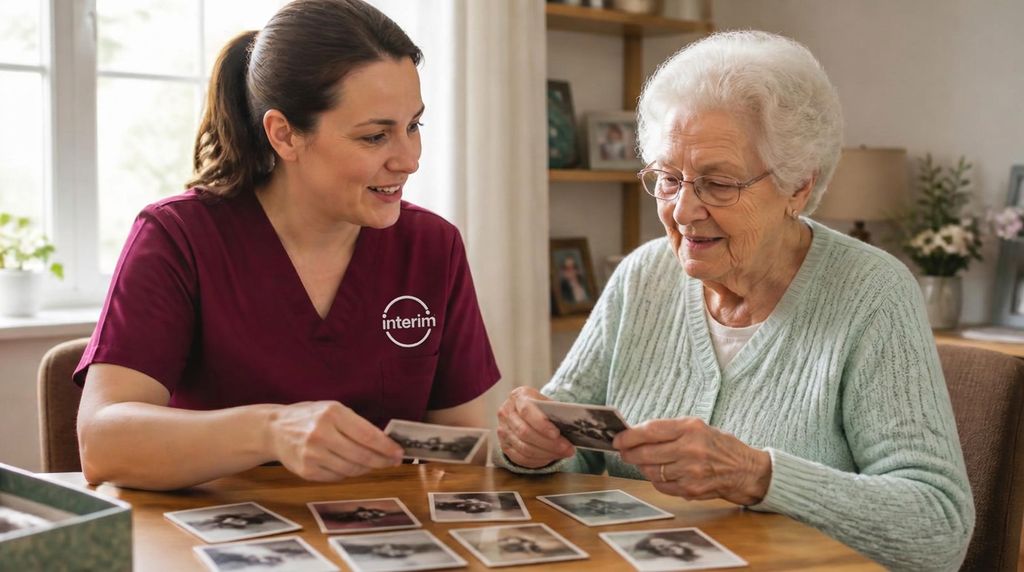
If you're just starting to research this term, here's the complete starting-point picture — what memory care actually is, who it's built for, and the real alternatives worth knowing about before you decide anything.
What Memory Care Actually Is
Memory care is a specialized type of residential care, usually a distinct unit within an assisted living community or a standalone facility, built specifically for people with Alzheimer's, other forms of dementia, or significant memory loss. It differs from general assisted living in three concrete ways: secured or monitored entry and exit to prevent wandering, staff specifically trained in dementia behaviors and redirection techniques, and a higher staff-to-resident ratio for closer supervision.
Who Memory Care Is Actually Built For
This level of care is designed for people whose dementia has progressed to a point where they're at real risk of wandering, getting lost, or not recognizing genuinely unsafe situations — not simply for anyone with a dementia diagnosis. Many people with early or middle-stage dementia live safely and well outside a memory care setting, at home or in standard assisted living, for years.
What It Actually Costs
Memory care generally costs somewhat more than standard assisted living — commonly cited in the range of 15 to 30 percent more — reflecting the specialized staff training and lower resident-to-staff ratios involved. Exact figures vary enough by facility and region that we'd rather point you toward a direct quote from any specific community than repeat a national number that may not reflect what you'd actually pay.
What a Typical Day Looks Like
Structured routines built around cognitive engagement appropriate to each stage — meals, activities, and rest on a predictable schedule, since consistency genuinely reduces anxiety and confusion. Environments are often designed with simplified navigation and clear sightlines specifically to reduce disorientation. We've written more about what daily life in memory care actually looks like.
How to Evaluate a Specific Memory Care Community
Staff-to-resident ratio, especially overnight; specific dementia training and how often it's refreshed; how the community handles agitation or a medical emergency; and what's genuinely included versus billed separately. We've written a detailed list of questions worth asking before you tour.
The Alternative Worth Knowing: Staying Home
This is the part a lot of families don't realize until they've already started touring facilities: in-home dementia care can provide much of what memory care offers — structure, redirection, safety-focused support — in the home your loved one already knows. We don't think this decision should come down to cost. What actually matters, in our view, is safety: if there's a real risk of physical harm to your loved one or a family member, a secured facility offers something home genuinely can't. Short of that, staying home is a legitimate option for far longer than most families initially assume.
How Interim Approaches In-Home Memory Care
We build the same structure, redirection, and safety-focused routine memory care facilities rely on, adapted specifically to your loved one's own home and history. We've written about the common mistakes families make trying to do this alone, and what actually works better.
Our 7th Week Guarantee
No long contracts. If you don't feel the difference after six weeks of care at 20 or more hours a week, your seventh week is free.
Get Started
Call us at (801) 401-3515 for an honest comparison, including whether staying home is realistic for your specific situation. We'll tell you plainly if we think a facility is the better fit.
Read our full library of memory care guides — what daily life looks like, assisted living vs. memory care, how to evaluate options near you, and mistakes to avoid doing this at home — or learn more about our dementia care services.
Dementia, Alzheimer's & Memory Care
More from this series
Memory Aids for Dementia: What Actually Helps | Interim
Simple, low-tech memory aids often work better than complicated apps or devices for someone with dementia. Here's what to actually try.
When a Dementia Patient Refuses to Go Into Care | Interim
When a loved one with dementia refuses help — a facility, a caregiver, even basic assistance — here's why it happens and what tends to work better than pushing harder.
Does Medicare Cover Memory Care? | Interim Home Care
Medicare doesn't cover memory care room and board, but it does cover certain medical services within that setting. Here's exactly what's covered and what isn't.
Dementia Treatment: What Every Family Should Know | Interim
A plain-English overview of current dementia treatments — what medications actually do, what's genuinely new, and what remains disputed. We're not doctors; here's how to have that conversation.