
INTERIM HOME CARE UTAH
A Family's Guide to Dementia Music
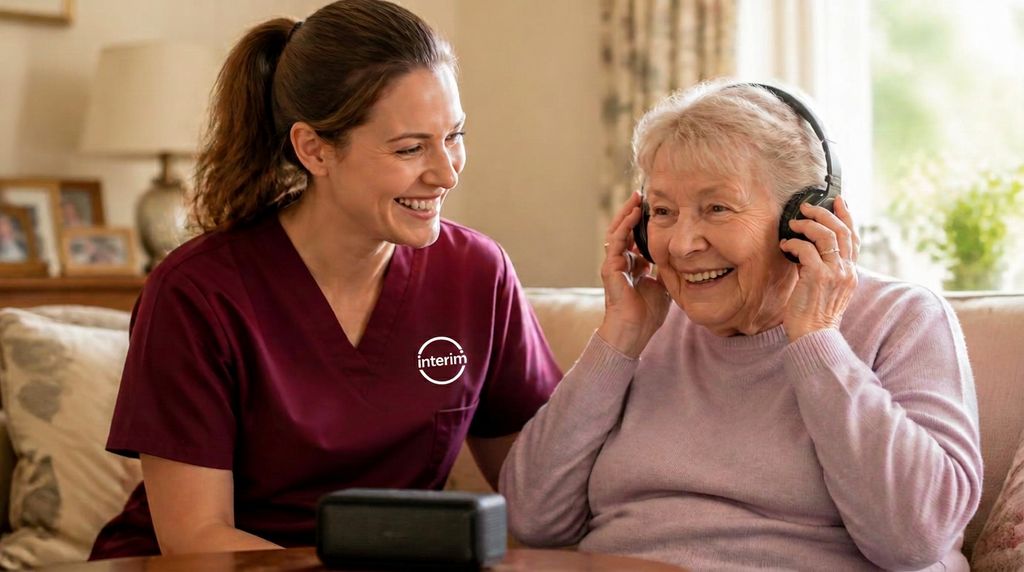
Music is one of the most consistently effective tools for engaging someone with dementia, even in later stages when other activities have become difficult. Here's why, and how to actually use it.
Why Music Works When Other Things Don't
Musical memory is processed differently in the brain than other types of memory, and tends to stay accessible longer through dementia's progression than verbal or episodic memory. A person who can no longer hold a conversation may still sing along to a familiar song word for word — this isn't unusual, it's a well-documented pattern.
How to Choose the Right Music
Music from a person's teens through their twenties tends to be the most deeply encoded and most likely to spark recognition and engagement — the songs someone loved most during that period of their life, not necessarily what's playing now or what they liked most recently. Ask family members what mattered to your loved one during that window if you're not sure.
Practical Ways to Use Music
Play familiar music during difficult transitions — before a shower, during a car ride, or when agitation starts to build. Sing together rather than just playing music passively. Use music as a calming tool specifically during sundowning hours, when agitation tends to peak. Create a simple, consistent playlist rather than relying on unpredictable radio or shuffle.
What to Watch For
Not every song lands the same way every time, and that's normal — mood and context matter. If a specific song seems to cause distress rather than comfort (sometimes tied to a specific memory), it's fine to skip it and try something else.
Beyond Just Listening
Simple rhythm activities — clapping, tapping, gentle movement to music — can engage even when singing or listening alone isn't holding attention. This doesn't require musical skill on anyone's part.
How Interim Uses This
Our Care Professionals build music into daily routine when it's a genuine source of comfort for a specific client — it's one of several tools we use, tailored to what actually resonates with your loved one specifically.
Our 7th Week Guarantee
No long contracts. If you don't feel the difference after six weeks of care at 20 or more hours a week, your seventh week is free.
Get Started
Call us at (801) 401-3515 and tell us about your loved one. We'll talk through what kind of engagement could help.
Learn more about our dementia care services, or read about managing sundowning and other distraction techniques.
Dementia, Alzheimer's & Memory Care
More from this series
Memory Aids for Dementia: What Actually Helps | Interim
Simple, low-tech memory aids often work better than complicated apps or devices for someone with dementia. Here's what to actually try.
When a Dementia Patient Refuses to Go Into Care | Interim
When a loved one with dementia refuses help — a facility, a caregiver, even basic assistance — here's why it happens and what tends to work better than pushing harder.
Does Medicare Cover Memory Care? | Interim Home Care
Medicare doesn't cover memory care room and board, but it does cover certain medical services within that setting. Here's exactly what's covered and what isn't.
Memory Care, Explained | Interim Home Care Utah
What memory care actually is, who it's for, what it costs, and the genuine alternative of staying home. The complete starting-point guide.