
INTERIM HOME CARE UTAH
Dementia and Driving: How to Know When It's Time
This is one of the hardest conversations in dementia care — not because families don't know it needs to happen, but because driving represents independence in a way almost nothing else does, and taking that away can feel like taking away someone's dignity.
A Dementia Diagnosis Doesn't Mean an Immediate Stop
In the earliest stages, many people with dementia can still drive safely, at least for a while, particularly on familiar routes in low-stress conditions. This isn't a decision that has to happen the day of a diagnosis — but it is one that needs ongoing, honest reassessment as things progress, not a one-time judgment call.
Warning Signs Worth Watching For
- Getting lost on routes that used to be completely familiar
- New dents, scrapes, or damage to the car without a clear explanation
- Trouble with multi-tasking behind the wheel — checking mirrors, watching traffic, and reacting to signals all at once
- Slower reaction time or hesitation at intersections
- Confusion about which pedal is which, or forgetting basic rules of the road
- Other drivers honking more frequently, or near-misses that didn't used to happen
- Family or friends expressing concern, even indirectly
One or two of these in isolation might not mean much. A pattern building over time is the real signal.
You Don't Have to Decide This Alone
A professional driving evaluation — often available through occupational therapists who specialize in driving assessments — can give an objective read that doesn't rest entirely on family judgment or a difficult conversation at the kitchen table. Some families find it easier for a doctor or evaluator to be the one to deliver the news, rather than a spouse or adult child.
Having the Conversation
Framing it around safety rather than capability tends to go better than framing it as taking something away — "I'm worried about you getting hurt" lands differently than "you can't drive anymore." Having a concrete alternative ready — rides, errands covered another way — makes the conversation feel less like a pure loss and more like a transition.
How Interim Can Help
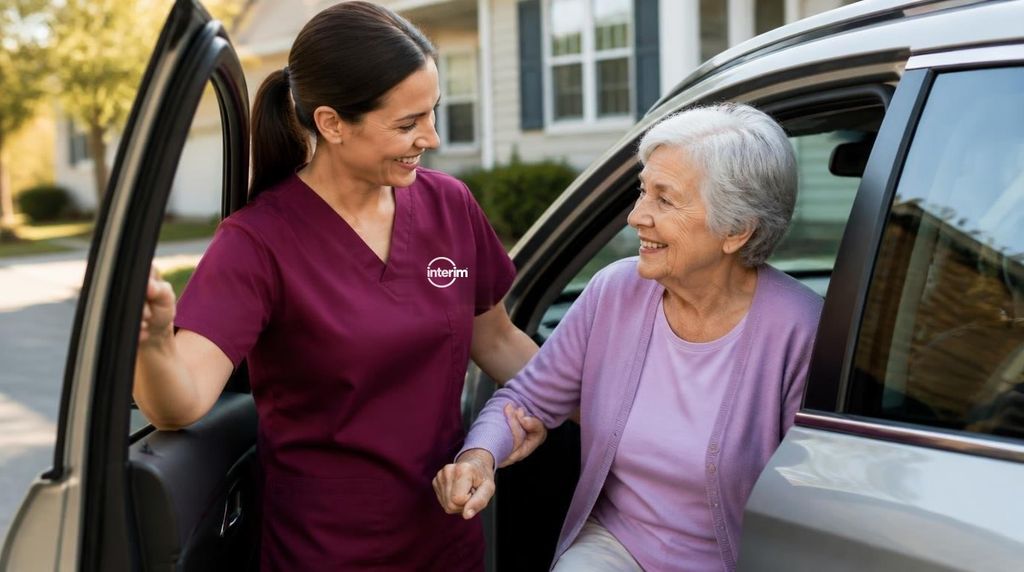
Losing driving independence often means a family needs to cover transportation to appointments, errands, and social visits that used to happen without a second thought. We're a non-medical home care agency, and transportation support is a regular part of what our Care Professionals provide — it's often one of the first gaps families ask us to fill.
Our 7th Week Guarantee
No long contracts. If you don't feel the difference after six weeks of care at 20 or more hours a week, your seventh week is free.
Get Started
Call us at (801) 401-3515 if driving has become a concern for your family. We'll talk through what support could look like, including transportation.
Learn more about our dementia care services, or read about the timeline of dementia stages to understand what's ahead.
Dementia, Alzheimer's & Memory Care
More from this series
Memory Aids for Dementia: What Actually Helps | Interim
Simple, low-tech memory aids often work better than complicated apps or devices for someone with dementia. Here's what to actually try.
When a Dementia Patient Refuses to Go Into Care | Interim
When a loved one with dementia refuses help — a facility, a caregiver, even basic assistance — here's why it happens and what tends to work better than pushing harder.
Does Medicare Cover Memory Care? | Interim Home Care
Medicare doesn't cover memory care room and board, but it does cover certain medical services within that setting. Here's exactly what's covered and what isn't.
Memory Care, Explained | Interim Home Care Utah
What memory care actually is, who it's for, what it costs, and the genuine alternative of staying home. The complete starting-point guide.